
The Rise of Hyper-Personalised Marketing: How AI Reads Intent Better Than Keywords
The Shift from Keywords to Real Intent
The evolution of marketing is changing faster than we have ever seen before, and one of the largest changes we face today is how brands are wired to understand customers. For decades, marketing was designed primarily around keywords. Businesses spent hours in conference rooms trying to guess what someone wanted by looking at the words they typed into a search bar. But that’s no longer the case. With increased AI tools and more intelligent data systems, businesses can understand real customer intent, even if the customer doesn’t type a single keyword. This new shift is called hyper-personalised marketing, and it is paving the way for what’s next in digital growth.
How AI Makes Personalisation Smarter
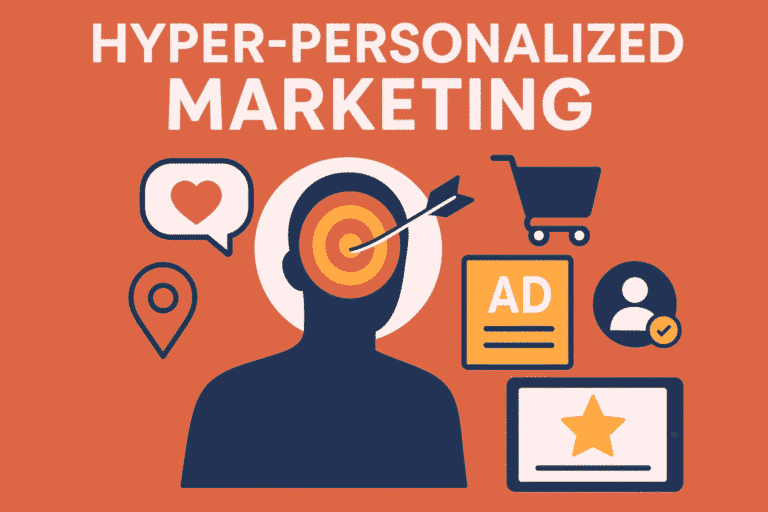
Hyper-personalized marketing operates based on understanding people on a more in-depth basis. Instead of providing everyone with the same ad or identical messaging, AI will study user behavior like what people click on, how long users remain on the page, when they typically shop, what they prefer not to view and even what they might purchase next. This feels more natural and useful because customers get what they actually want, not what a keyword suggests. AI uses browsing patterns, location, previous activity, voice search, and even mood signals to serve content that is matched with life (not simply search terms).
Understanding Intent Beyond Words
Modern AI systems are able to read intent in ways that are impossible. Example: Someone searching “best running shoes for flat feet” versus someone who simply browses fitness blogs. AI knows that both may be future buyers, but require different messaging – one needs a direct product suggestion, the other may require education on the topic or soft recommendations. This level of understanding allows brands to speak with customers in the right tone at the right moment.
How AI Is Changing Search and User Journey
This transition also enhances the functionality of search engines. Rather than simply matching web pages to keywords, search engines will contemplate context, consumer behavior, and content helpfulness. Consequently, brands should prioritize customer experience over keyword density. AI-enhanced overlays also help predict what each consumer will want to do or what they should do next, and marketers can optimize their performance or customer journey without being pushy or demanding. Additionally, optimized overlays reduce wasted ad spending in that campaigns will reach the right people, instead of a random audience.
Why Hyper-Personalisation Builds Stronger Trust
Hyper-personalized marketing, depending on how it’s applied, can also develop a deeper trust. People appreciate brands that seem to “get” them. In a situation where your messaging is personal, not generic, customers will stick around longer, engage more deeply, and convert more readily. Hyper-personalization develops long-term customer loyalty and reduces marketing costs over time. In summary, AI-based intent tracking is not just the next big thing; it is the next foundation of digital marketing. The brands that utilize it first will reap the benefits, while the brands relying solely on keyword density will fall behind as customer expectations change.
FAQs
What is hyper-personalised marketing?
Hyper-personalised marketing leverages AI technology to gain a deeper understanding of each customer’s needs, habits, and behavioural patterns. Instead of treating everyone the same, it merely exposes them to content and offers that are more aligned with their actual interests.
How does AI understand user intent?
AI analyzes patterns based on factors like clicks, browsing duration, purchase history, geographic locations, and previous searches. It then uses that data to predict the next thing a user wants, even if the user does not use the specific keywords.
Is AI better than keywords for marketing?
Yes. Keywords tell you what someone typed into a search box, but AI can read a little deeper. AI has insights into a user’s behaviors and what actions they might take in the future, which provides better targeting and ultimately, more accurate outcomes.
Does hyper-personalised marketing improve sales?
Yes. Customers receive relevant messages. When content is more personally relevant and engaging, it increases brand trust, which improves their likelihood of making a purchase.
5. Can small businesses engage in hyper-personalised marketing?
Absolutely. Many easy-to-use, low-cost tools allow small businesses to hyper-personalise emails, website content, ads, product suggestions, and more without breaking the bank.
How does artificial intelligence assist with search engine rankings?
AI-driven content improves user experience, which increases the amount of time users spend on the page. This is viewed by the search engine as a good ranking signal, and the site or pages will tend to rank higher.
Is personalisation an invasion of privacy?
Not when done correctly. AI is using data that is permitted for use and that people share of their own volition through their normal behavior. Brands must still keep legal boundaries in mind and proceed to protect customer data.
What tools help brands with their hyper-personalisation journeys?
AI analytics tools, marketing automation platforms, customer behavior trackers, and intent-based advertising systems will all assist brands in delivering the right message at the right time.